
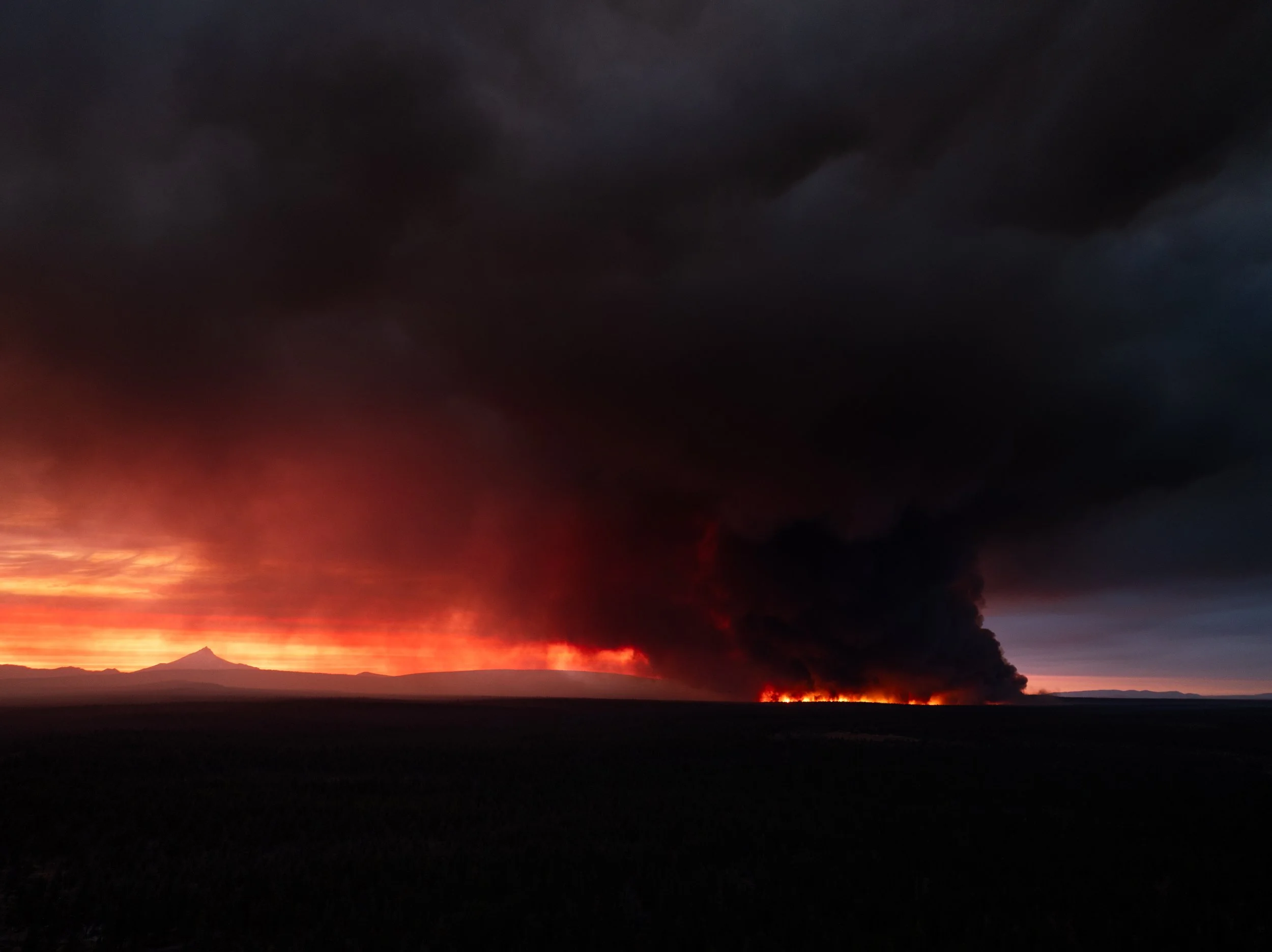
Wildfire is more than the flames we see on the news. It’s a complicated story of people, landscapes, decisions, and preparation—and I’ve made it part of my work to document that story from the ground.
DOCUMENTING WILDFIRE
Cinematography, first-person reporting, and a changing relationship with fire.
I'm Connor Nelson, a documentary cinematographer and filmmaker. Over the last several years, wildfire has become an increasingly important part of my work. I didn't get into this because I wanted to film destruction. I got into it because the more time I spent around wildfire, firefighters, scientists, and communities living with fire, the more complicated the story became.
For a long time, our answer to wildfire has largely been suppression: put fires out as quickly as possible and protect the communities in their path. Suppression will always be an essential part of protecting lives and communities, but I've also learned there are limits to what suppression can accomplish, particularly under extreme conditions. Decades of land management decisions, accumulated fuels, expanding communities in fire-prone landscapes, drought, weather, and a changing climate have all contributed to a problem that can't be solved by firefighters alone.
That realization is what pulled me deeper into documenting wildfire. I want to understand it, and I want the people watching my work to understand it too.
WHY I GO
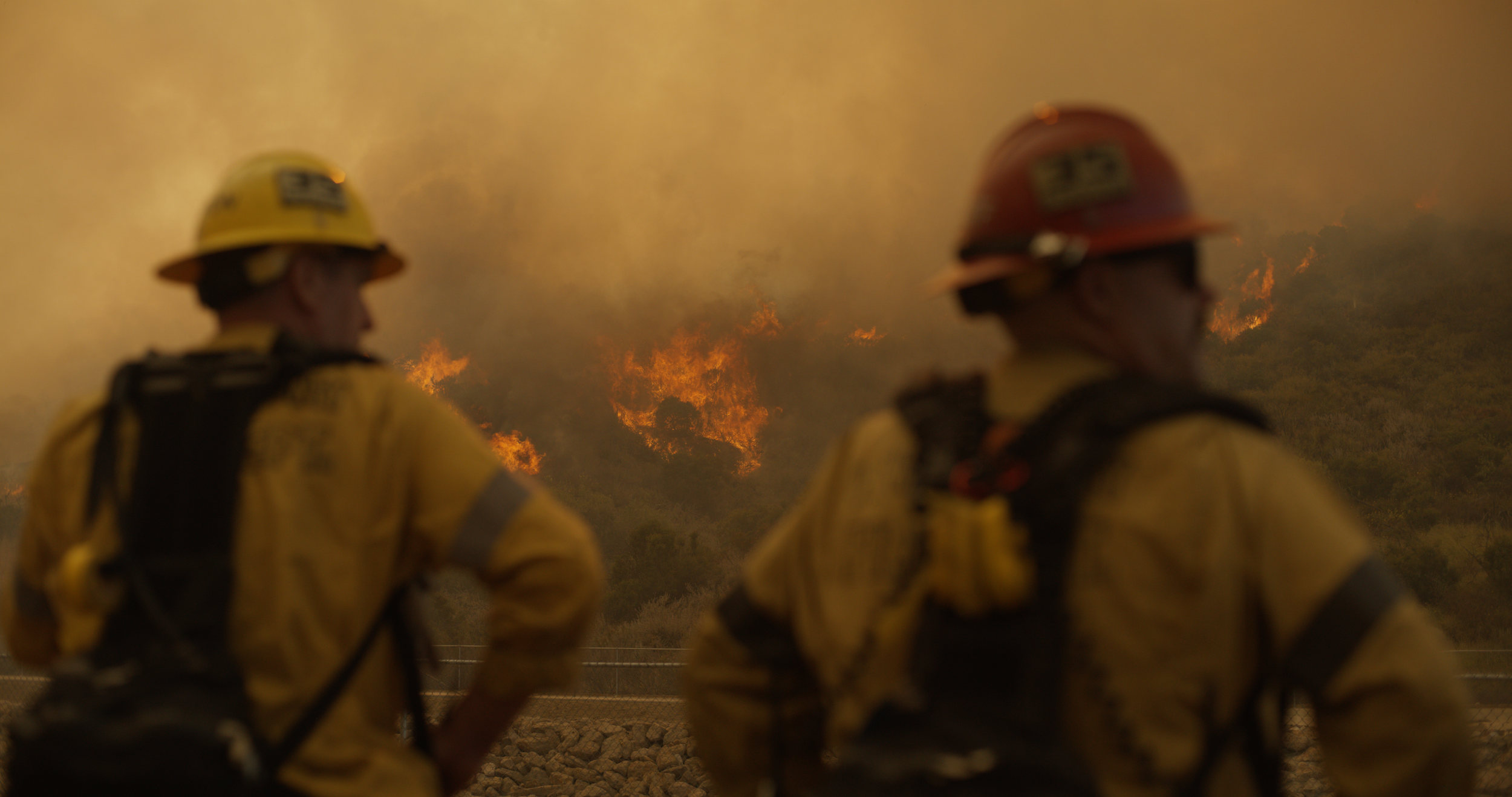
When a major wildfire starts, I'm often moving toward the place everyone else is being told to leave. There is obviously risk involved, and that responsibility isn't something I take lightly. But being there allows me to document something that's difficult to understand from a distance.
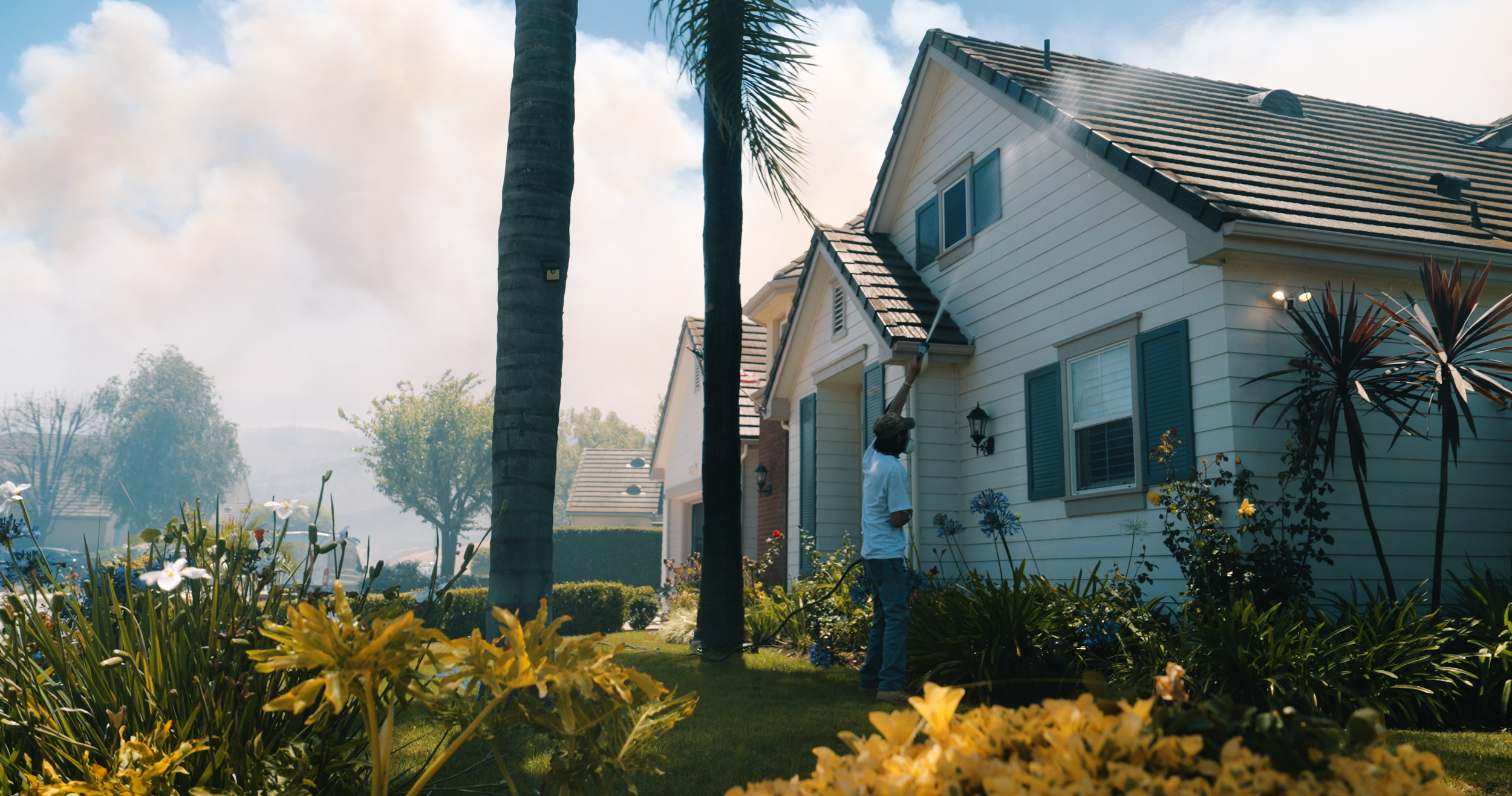
I film fire behavior, firefighters, aircraft, evacuations, homes, and communities. I talk with the people experiencing these events and, when appropriate, talk directly to my camera about what I'm seeing on the ground. Sometimes that's cinematic documentary work. Sometimes it's real-time reporting. Often it's both.
The goal isn't to sensationalize wildfire. It's to help people better understand what these incidents actually look like, why they happen, what firefighters can and cannot realistically do, and ultimately what we can do before the smoke is in the air.
THE PALISADES FIRE
In the days leading up to January 7, 2025, I had been closely watching the forecast for Los Angeles. The conditions concerned me enough that I began getting my camera and wildfire equipment ready several days beforehand. By the night before, my gear was packed in my vehicle.
I didn't know where a fire might start. I just knew Los Angeles was entering a dangerous weather window, and I wanted to be prepared if something happened. On January 7, I was following incidents through Watch Duty when the Palisades Fire started. I grabbed my equipment and headed toward the fire.
What followed was one of the most intense days I've ever documented. I filmed throughout the day, into the evening, and well into the early morning hours as the fire moved through Pacific Palisades. Homes burned. Residents evacuated. Firefighters moved from structure to structure. Embers traveled through neighborhoods in extreme winds. And all day, I documented what I was seeing.
THE REACH
As the fire grew, so did the audience following my coverage. I continued doing what I'd done on previous wildfires: filming what was happening and speaking directly to the people following along about what I was seeing. Only this time, the scale was completely different.
Within days, my original wildfire coverage had accumulated more than 300 million views across social media. One piece of footage alone reached approximately 46.7 million views on Facebook, 27.8 million views on Instagram, and 19.9 million views on TikTok — 94.4 million views on a single piece of footage across those three platforms. Another Facebook Reel surpassed 81.6 million views on its own.
During those same few days, approximately 315,000 people followed my Facebook page, 65,000 followed me on Instagram, and 26,000 followed me on TikTok. More than 400,000 new people began following my work.
Those numbers are difficult for me to fully comprehend even now. But what mattered most was that there was clearly an enormous appetite for information about what was happening on the ground.
FROM BREAKING NEWS TO DOCUMENTARY
After filming well into the early morning, I eventually went home and slept. When I woke up, The New York Times had reached out asking me to help cover the fires. I went back out and spent the next several days contributing coverage for the Times while continuing to document what was happening across Los Angeles.
But the story was becoming much bigger than the breaking news of those first few days. I then joined an incredible team to create Weathered: Inside the L.A. Firestorm for PBS. The urgency surrounding the project was unlike anything I'd experienced in documentary filmmaking.
PBS greenlit the film in just four days. Our team was told internally that it was the fastest-greenlit production in PBS history.
What began with cameras on the ground as Los Angeles was still burning became a national, hour-long PBS documentary in a matter of weeks, one that ultimately reached millions of viewers. It gave us the opportunity to do something that couldn't happen in a social media post or breaking-news clip: go deeper.
Why did these fires become so destructive? Where are the limits of wildfire suppression? How do our landscapes, communities, and homes influence what happens when extreme fire arrives? And, most importantly, what can we do differently before the next one?
A year later, our team returned to continue that story with Weathered: After the L.A. Firestorm. For me, those two films represent what I hope wildfire storytelling can accomplish: be there when it's happening, document it honestly, help people understand what's happening in real time, then stay with the story long enough to ask the harder questions about why it happened and what we can do before it happens again.
THE BIGGER STORY
The Palisades Fire was extraordinary, but the larger wildfire problem isn't confined to one fire or one city. I've spent enough time around these incidents to know that there will be another extreme fire day, and another after that.
We cannot control every ignition, and there will be conditions under which even an enormous firefighting response is overwhelmed. That doesn't mean we're powerless. It means more of the conversation needs to happen before the fire starts.
How do we manage our forests and landscapes? How do we build and maintain communities in fire-prone environments? How do we reduce fuels around homes? How do we prepare for evacuations? How do we give firefighters communities they actually have a chance of defending? And how do we learn to live with fire rather than believing we can eliminate it entirely?
Those are the questions that keep bringing me back.
WHY I'LL KEEP DOCUMENTING IT
Wildfire is going to remain part of life in the American West. Extreme fire events will happen again. My hope is that the images and stories coming out of these disasters can do more than show people what burned. They can help us understand why it happened, what worked, what didn't, and what we can do differently before the next one.
That's why I continue going to fires. That's why I continue talking with firefighters, scientists, homeowners, and the people trying to solve these problems. And that's why I'll keep bringing a camera.
Because the best time to prepare for the next wildfire isn't when you can see the flames. It's long before they arrive.
I’ve built my life around chasing stories worth telling, documenting them honestly, and sharing them in a way that moves people to see the world differently.
—Former Customer